Welcome to Our Newsletter
Dear Friend,
It is one thing to speak about love. It is another to allow love to become something we do.
That challenge runs quietly through each of the reflections in this fortnight’s newsletter. Our contributors invite us beyond a faith that remains only in words, ideas or good intentions, towards a faith that becomes visible in the way we forgive, serve, pray, reconcile and encounter one another.
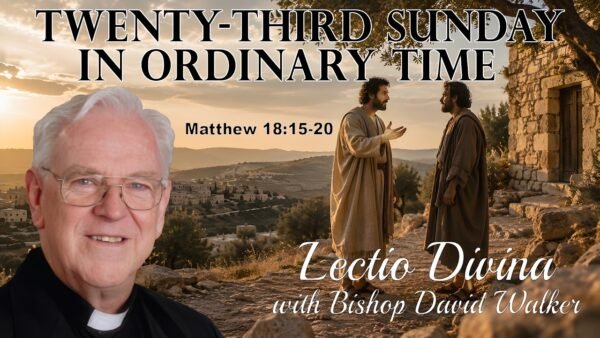
Dr Laurie Woods, reflecting on the Twenty-Third Sunday in Ordinary Time – Year A, reminds us that Christian faith can never be simply a matter of “God and me”. At the heart of Christian community is our responsibility for one another. When relationships fracture, Jesus calls us not towards judgement or point-scoring, but towards the much more demanding work of honest conversation, reconciliation and restoration.
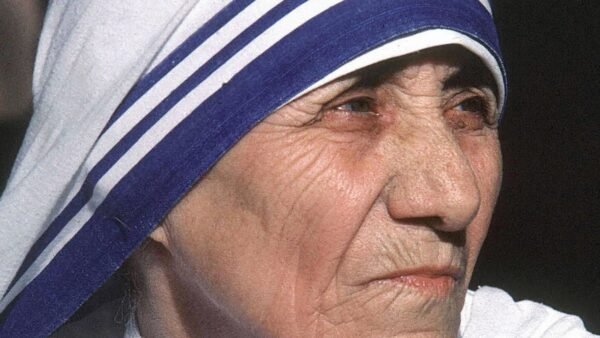
Virginia Fortunat takes us to the heart of St Paul’s teaching that love fulfils the law. In It Is Written into Being, she turns to the extraordinary witness of St Teresa of Calcutta, whose faith became tangible through ordinary human hands—hands that served, comforted, prayed and reached towards those whom others had ceased to notice. Her reflection leaves us with a beautifully practical question: who is before me today, and how might my hands become the hands of Christ for them?
Eric Lahey, in We’re on That Road Now!, brings us to the road to Emmaus and then makes an important turn: we do not need to imagine ourselves travelling that ancient road. We are already on it. Each time we encounter Christ in the Eucharist, we too are invited to recognise him, to be transformed, and then to become his presence for others.
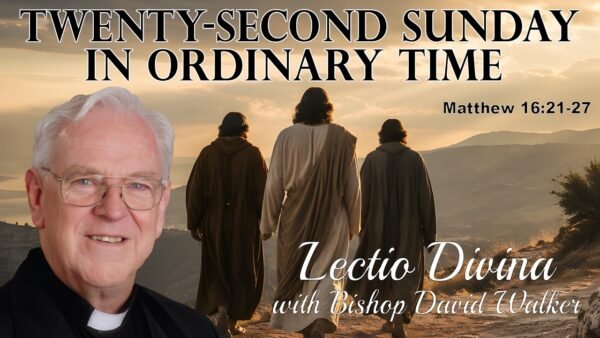
Bishop David Walker explores this same movement from faith to action through the spiritual tradition in Devotion: A Heart Ready for God. True devotion, he reminds us, is more than religious feeling or spiritual consolation. It is a readiness of heart—a willingness to pray, forgive, serve, persevere and respond generously when God calls. Prayer and action become the “two feet” upon which the Christian life moves forward.
Together, these reflections pose a simple but searching question: What happens after we hear the Gospel?
Do we allow it to change something?
Perhaps we make the first move towards repairing a relationship. Perhaps we recognise someone who has become invisible to others. Perhaps we approach the Eucharist with renewed awareness of what it asks us to become. Or perhaps we simply begin the day with a heart willing to say, “Here I am, Lord.”
The Gospel becomes most powerful when the Word we hear becomes the life we live.
May these reflections encourage each of us not simply to believe in the love of Christ, but to allow that love to take flesh through our own lives.
As always, thank you for being part of the Lectio Divina community. We invite you to share these reflections with your family, friends and parish community.
Every blessing,
The Lectio Divina Team